
One summer, I had the opportunity to coach the All-Star baseball team our son, Thomas, played on. I'd been coaching our kids' sports teams for nearly 10 years, but this was my first time coaching a team where every kid was a good player. They were all good at catching, throwing, and hitting. They were All-Stars, but they weren't Major Leaguers (yet!).
In fact, they were only 8 years old. A few were only 7.
And as 7 & 8 year olds are prone to do, they make mistakes like missing a ground ball or throwing the ball to the wrong base or any other number of mistakes we can make on the ballfield. So this summer we've created a catch phrase:
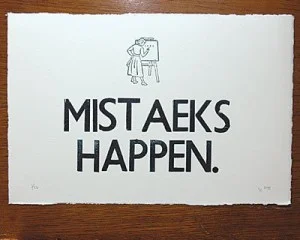
"It's okay to make mistakes."
Amazing what's happened to the boys, how much freer they play when they know it's okay to make a mistake. We talk a lot about that, that we're not perfect, even us coaches, and we all make mistakes.
The important part here is we have to learn from our mistakes. The important part here is that we have to learn from our mistakes. Otherwise, we're just repeating the same behavior and expecting a different result. And so we talk about the mistake, how we can learn from it, and how we can get better.
We also talk about making a mistake and then not making another mistake right behind it aka compounding mistakes. These lead to long innings when we're in the field, trust me! More on these later.
I'm a firm believer that learning from our mistakes is the Opportunity of a Lifetime. Because it takes a lifetime. Learning is how we get better, it's how we improve, it's how we achieve. Not only on the ballfield, or at work, or at home. But also in our financial lives.
I need more fingers and toes to count all the financial mistakes I've made. Like running up massive credit card debt when I got out of college. You might say I "Discover-ed" my early 20's! I also leased my first car out of college and had no idea what I was getting myself into. Ugh, that was a disaster. Thankfully, I've been able to learn from those and the rest of them.
And there are other opportunities for us to learn from our financial lives. Maybe 2008/2009 was a learning opportunity in what not to do with your investments, or how to behave around them. Maybe the recovery over the subsequent years was another learning opportunity. Maybe we missed a financial opportunity, or took a chance on a financial opportunity that didn't pan out. Maybe we didn't start saving as early as we could have. I could go on and on…you get the picture.
Hopefully we don't compound those mistakes, because the compounding mistake is a big no-no. And as I've written about in Battle of the Impulses, our emotions can sometimes get the better of our investment decisions. We bailed on the market in 2009 because it was down 30-40% and we didn't want to lose any more money. Then we sat on the sidelines until 2012 or 2013 to get back in, because we just knew it was going to crash again. Now we're in a real pickle, because we sold near the market lows, and missed all of the recovery and then some. Compounding mistake...double whammy!
So we take these mistakes and we learn from them. It's not about being right or wrong. Rather, how can we get better? How can our balance sheets, our retirement plans, and our overall financial lives improve? What can we do differently to avoid making the same mistakes?
Learning from our mistakes is important, but so is building better habits. As I discussed in Back to School Routine: Back to Financial Routine, consistency, organization, and dedication can make a meaningful difference in our financial lives.
I think having a financial advisor can make a meaningful difference. Someone who helps you think through financial decisions before making them. Someone who can provide perspective when markets get ugly, hold you accountable to your goals, and help keep you from compounding one mistake with another.
Someone who helps you make better financial decisions over time.
Because learning from our mistakes isn't a one-time event.
It's the opportunity of a lifetime.